
'In equities, it has diversified portfolios.' 'So the short-term movement of individual stocks does not impact them.'

Tamal Bandyopadhyay offers some unsolicited advice for a government wh,ich came to power, with brute majority and the nation's pragmatic chief money man.
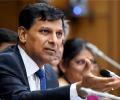
Rajan said RBI should pay as much dividend as possible to the government, which over the past two years has run into billions of dollars

'In times of recovery, we may see a rural-urban divide with the urban pockets affected more by COVID-19, but the MFI business model should encourage banks to handhold them in this hour of crisis,' notes Tamal Bandyopadhyay.

Officials say that such a list, to be updated on a real-time basis, will serve as a ready reckoner in identifying those committing multiple economic offences

Reserve Bank of India Governor Shaktikanta Das tells Anup Roy, Raghu Mohan and Niraj Bhatt that it is time for banks to lower interest rates and start lending to cash-starved finance companies after due credit appraisal and proper risk assessment.

The government may soon give the green light to bilateral trade between Russia and India in their national currencies to avoid any trade disruptions, multiple people aware of the matter said. While the Department of Commerce has recommended the proposal, an announcement is likely to be made by the finance ministry after further deliberations between the Department of Economic Affairs and Department of Financial Services. "The finance ministry will take a call on how to peg the two currencies," a senior government official told Business Standard. In the past, the two nations have had rupee-rouble trade, and when such an arrangement is implemented again, it will bypass the sanctions imposed on Russia by the West.

The Reserve Bank of India on Tuesday allowed for-profit companies with large and widespread retail outlets to act as business correspondents. The move will both deepen and broaden financial inclusion. Non-banking finance companies, however, have been excluded from the list.

The central bank can directly print money and finance the government, but it should avoid doing so unless there is absolutely no alternative, former RBI governor D Subbarao on Wednesday said while pointing out that India is 'nowhere' near such a scenario. In an interview with PTI, Subbarao suggested that to deal with the second wave of COVID-19 induced slowdown in the economy, the government can consider Covid bonds as an option to raise borrowing, not in addition to budgeted borrowing, but as a part of that.

RBI had a board meeting recently.

Bangladesh is in turmoil, which is not good news for India, which shares a porous 4000 km border with it. There is a danger of fundamentalism growing there, and India has to move in to reset its ties with the new dispensation before China and Pakistan make capital out of it, alerts Ramesh Menon.

Shaktikanta Das is a master of the finest balancing act who listens to all but takes his own decisions, discovers Tamal Bandyopadhyay.

For financial sector companies setting up shop in India, as of now the go-to regulators are obviously Sebi and the RBI with carve-outs for IRDAI or possibly PFRDA. But this could change soon with the International Financial Services Centres Authority, observes Subhomoy Bhattacharjee.
Investors looking for a fixed-income product that is free of credit risk may invest in these bonds.
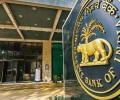
With inflation remaining at elevated levels, central banks around the world, including the Reserve Bank of India (RBI), will kill excess demand in economy over the next six to eight months, sources in the know said. They also indicated that there could be a rate hike in June, when the inflation forecast for the current financial year would be raised. The RBI, the sources said, might announce more steps such as raising the limit on held-to-maturity (HTM) bonds to support government borrowings but might not come out with any further quantitative easing GSAP (Government Securities Acquisition Programme) measures.

Sebi has pushed for better corporate governance of listed companies through measures such as the need for a succession policy

Reserve Bank of India Governor Raghuram Rajan took charge of India's central bank when the rupee seemed to be in a tailspin while the country was facing runaway inflation.

One incident should not be used to generalise the health of all cooperative banks, says RBI governor Shaktikanta Das.

If indeed we want the board to manage the RBI, probably the government should take a close look at the US Federal Reserve system which has a two-part structure - a central authority in Washington, DC, and a decentralised network of 12 Federal Reserve Banks located throughout the country, says Tamal Bandyopadhyay.
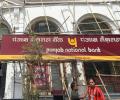
25,600 cases of banking fraud totalling Rs 1.79 billion were reported up to December 2017. 'There is an inherent legacy when it comes to insuring crime.' 'Generally, most banks are uncomfortable in sharing data about employee fraud.'

The government reserved all jobs in J-K for the domiciles -- people who have stayed there for at least 15 years. On Wednesday, while laying down the rules for domiciles, the government had reserved jobs up to Group 4 only.
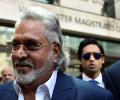
'The Insolvency and Bankruptcy Code is neither beneficial to banks nor helpful for the borrower.' 'Genuine people who are caught in economic stagnation will lose everything and thousands will lose jobs.'

Digital services work best when the seller designs a system where default options are designed to help the buyer, says Debashis Basu.

In any case, Ghosh could take lessons from the best professionally managed companies all over the world that always groom the CEO successors well in advance.

Unlike in the past, when old private banks compromised upon underwriting standards to take on the bulk, they've now realised that scaling up at the cost of quality isn't worth the while. These banks have also readjusted growth targets when required, and rebalanced books to preserve capital and asset quality.
Inflation in food articles category in January stood at 8.8 per cent.

The crises of the 21st century, 9/11, the economic meltdown, COVID-19, Russia-Iran war and the Hamas-Israel war seem to be never ending. In this situation, Iran might be contemplating a nuclear deterrent to defend itself, observes Ambassador T P Sreenivasan, the distinguished long-time Rediff contributor who turns 80 on June 17..
The word 'balancing' seems to be a favourite of Reserve Bank of India Governor D Subbarao.

The Serious Fraud Investigation Office (SFIO) has arrested a person who the Ministry of Corporate Affairs (MCA) said has emerged as the mastermind of the racket of incorporating a large number of shell companies with Chinese links in India.
The Reserve Bank of India (RBI) is likely to clamp down on gold coin sales by banks, amid rising bullion imports adding pressure to the current account deficit and weakening the rupee.
$100-million Walmart investment of 2010 into Cedar, a group company of Bharti, is being investigated by ED.
With the July 1 deadline to apply for bank licence fast approaching, aspirants are scrambling to meet the Reserve Bank of India's (RBI) eligibility criteria to apply.

'Modi is trying avenues to convince people why they should vote for the BJP.'
The Intelligence Bureau has prepared yet another report on Greenpeace, a non-government organisation, recommending cancellation of permission given to it for collecting funds abroad besides reassessment of its tax compliance.

Reserve requirements, mandatory investment in G-secs under Companies Act may slow lending for HNI investment in IPOs.
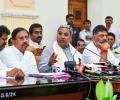
'Karnataka's finances are much healthier than the Union government's, which is indebted to nearly twice the extent of the state.'

Reversing the burden of evidence means that the principle of innocent until proven guilty does not apply. It is exactly the opposite: Guilty as charged, until you can convince the judges of the contrary, points out Shekhar Gupta.

As lobbying and counter-lobbying intensify, right now, it looks like a T20 match, discovers Tamal Bandyopadhyay.

India's Right-wing has sought to own our democracy by making itself appear the stuff of majority, and sometimes, a national ethos older than the Constitution on which our democracy is based, argues Shyam G Menon.

Govt reconstitutes body, says will not interfere in senior PSB appointments
